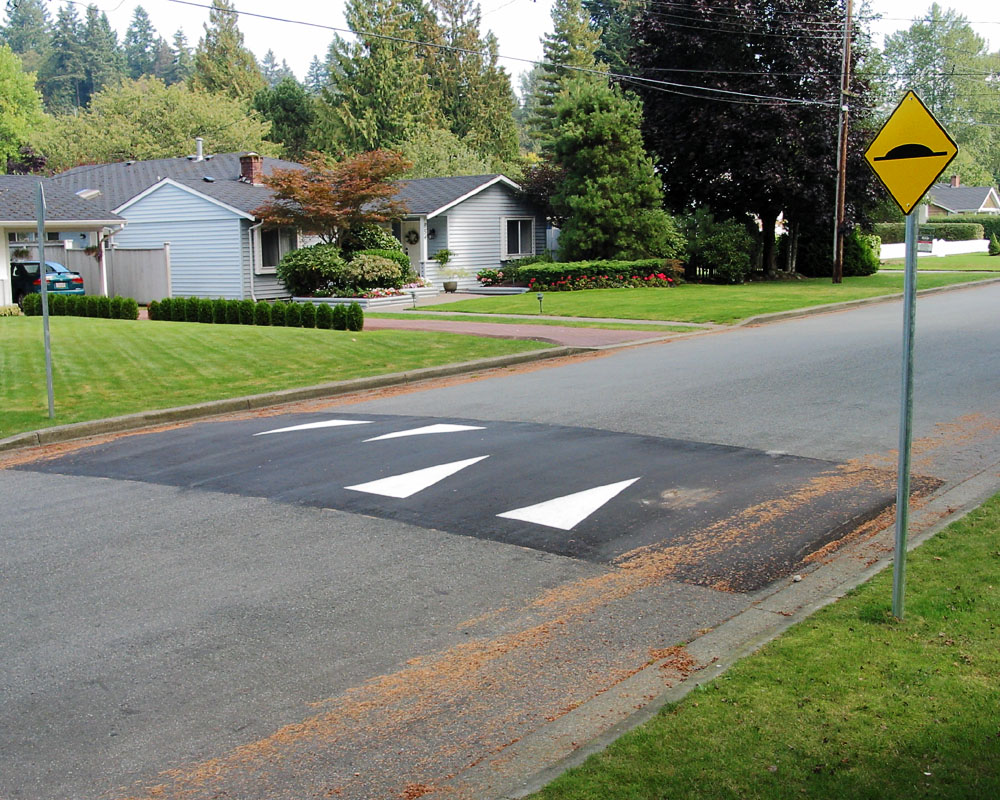
San Rafael residents who want speed humps, traffic circles, or radar signs on their streets now have a formal path to request them, but they'll need their neighbors' signatures first.
The City Council approved a three-tier Traffic Calming Program Policy on Monday, July 20, replacing what city staff described as years of ad hoc responses to speeding complaints on residential streets. The city has budgeted $150,000 in fiscal year 2026-27 to begin building approved projects, according to a staff report prepared by Sayed Fakhry, the city's traffic engineer.
The policy drew pushback at the July 20 meeting from Vice Mayor Rachel Kertz and Dave Rhoads, co-chair of Walk/Bike San Rafael, who argued that engineering data, not neighborhood votes, should determine where safety improvements go, the Marin IJ reported.
How the tiers work
The simplest fixes require no petition at all. Under Tier 1, residents can report a speeding concern through the city's SeeClickFix portal, and staff can install warning signs or striping with approval from the city engineer and public works director.
Bigger projects need community buy-in. Tier 2 measures, which include electronic radar speed signs, bulb-outs, pedestrian refuge islands, and narrow median islands, require a petition signed by a simple majority (50% plus one) of households on the affected street. A seven-day speed and volume survey must then show that 85% of drivers are exceeding the posted limit.
Tier 3 goes further. Speed humps, traffic circles, and turn restrictions require the same petition and speed survey, plus sign-off from the San Rafael Fire Department to ensure emergency vehicles can still get through.
The $150,000 budget can cover Tier 1 projects, but Tier 2 and Tier 3 improvements may require additional funding or be delayed to a future fiscal year depending on demand.
Streets that don't meet the 85th-percentile speed threshold can reapply after two years.
The petition debate
Kertz questioned whether the petition requirement could be inequitable, asking staff whether online signatures might be allowed and whether other paths could achieve the same goal.
Rhoads was more direct.
"Traffic calming is fundamentally a public safety issue, and while neighbors should absolutely have a strong voice in identifying and shaping solutions, the decisions should ultimately be guided by engineering analysis, speed data, crash history and the city's adopted policies, not by referendum," he said at the meeting.
Fakhry noted that the city can bypass the petition process entirely for streets in the Safe Routes to School network or those flagged in the city's Local Roadway Safety Plan. Staff will also define each petition area narrowly to prevent the process from being diluted by residents who live blocks away from the affected street.
What's next
The petition form itself had not been designed as of the July 20 vote. City staff said community and council feedback would shape its final format. The council canceled its August 3 meeting, and no follow-up date for the petition design has been announced.
The traffic calming policy was a separate action from the council's vote that same night to lower speed limits on 18 street segments under Assembly Bill 43. Both homeowners and renters on affected streets are eligible to sign petitions under the new policy.