San Rafael has formally submitted five census tracts to the Governor's office for federal Opportunity Zone designation, a step that could unlock tax-advantaged private investment in the Canal neighborhood and downtown for the next decade. Nationally, the first generation of the program directed about $34 billion into qualifying properties, according to financial services firm Novogradac.
The city ranked its nominations by priority, with the Canal neighborhood and bayside communities east of Interstate 580 at the top and a downtown tract second, the Marin IJ reported. The Governor has until Sept. 30 to forward selections to the U.S. Department of the Treasury, which is scheduled to certify designations in November, according to the city's Opportunity Zone page. The new map would take effect Jan. 1, 2027, and last 10 years.
The submission follows the City Council's July 20 vote authorizing the nominations, which we covered July 30. What's new: the city has now transmitted its formal application to the state, complete with priority rankings, in a competitive process where California's governor can nominate only about 600 of the state's 2,469 eligible tracts.
Greg Minor, assistant director of community and economic development, said the top two tracts provide "the strongest opportunity for investment that aligns with the city's economic development, housing resilience and revenue objectives."
Five tracts, ranked
The city's priority list:
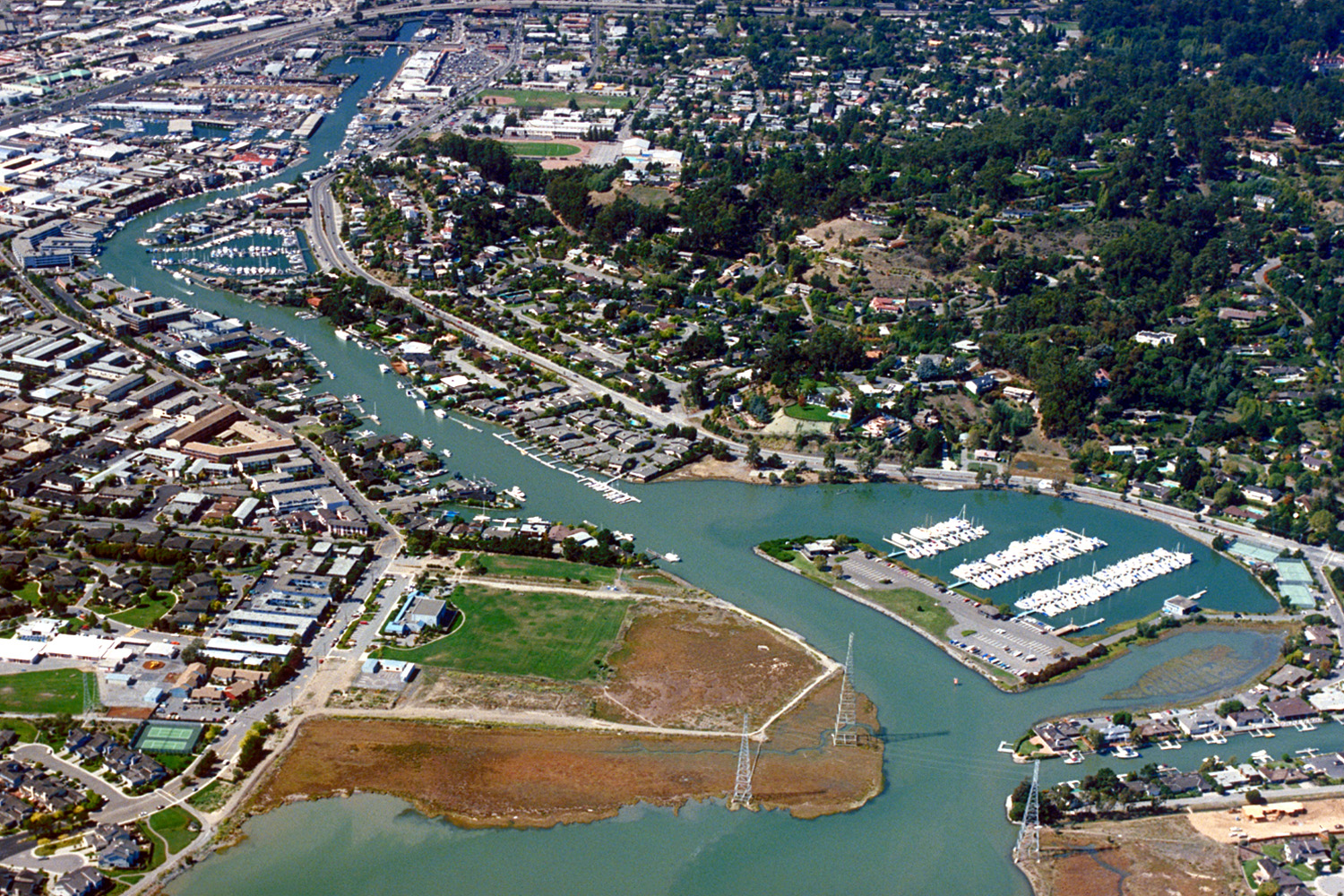
- Canal neighborhood/east of I-580 — includes underused commercial areas and the 85-acre Canalways salt marsh, one of the largest privately owned properties in San Rafael.
- Downtown San Rafael — the city's commercial core.
- Waterfront Canal area — already in the existing first-generation OZ program.
- Central Canal area — also in the current program; both tracts have high-density multifamily housing with a high percentage of low-income and Latino residents.
- Francisco Boulevard West/Bret Harte — largely industrial and commercial land west of I-580 and south of downtown.
Three of the five tracts sit within the Canal district, a 2.2-square-mile area home to more than 13,000 low-income residents, the majority Latino.
Displacement lessons from round one
The stakes are personal. In 2022, new owners of an apartment complex at 400 Canal St. launched an $8.2 million renovation and began asking tenants to voluntarily relocate. Rent increases and evictions followed. The city enacted a temporary relocation assistance program and right-to-return policy.
Those protections are expected to expire when the first-generation Opportunity Zone sunsets Dec. 31, 2026. Micah Hinkle, director of community and economic development, said staff is now preparing recommendations for a citywide tenant protection approach, decoupled from OZ boundaries.
Coalition and companion planning
The nominations carry the formal support of the East San Rafael Working Group, a public-private partnership that includes the city, the San Rafael Chamber of Commerce and the Canal Alliance. The Metropolitan Transportation Commission is also funding an east San Rafael specific plan to shape future development in the area.
Omar Carrera, CEO of Canal Alliance, framed the competition bluntly: "Across California and the nation, communities are competing aggressively for designation, often backed by significant lobbying resources and well-funded interests. East San Rafael cannot compete on lobbying dollars alone. Its strength lies in the coalition that has been built and the remarkable level of alignment it represents."
The Canal Alliance's 2026 Canal Neighborhood Snapshot, developed through community meetings and surveys, warns explicitly against "green gentrification" and proposes projects including a mixed-use affordable housing site at 88 Vivian St., a pedestrian bridge to San Rafael High School and a permanent Latino vendor market.
What's next
A public comment period opened Aug. 1, according to the city. The Governor must act by Sept. 30. If San Rafael's tracts are not selected, the city loses its shot at Opportunity Zone investment for the next decade.