San Rafael commuters heading to San Francisco on Golden Gate Transit's Route 101 bus can now catch a ride every 15 minutes during peak hours, half the wait they faced before April.
That's one of the most visible local changes from MASCOTS, the Marin-Sonoma Coordinated Transit Service plan that launched April 12 and is already posting strong early numbers.
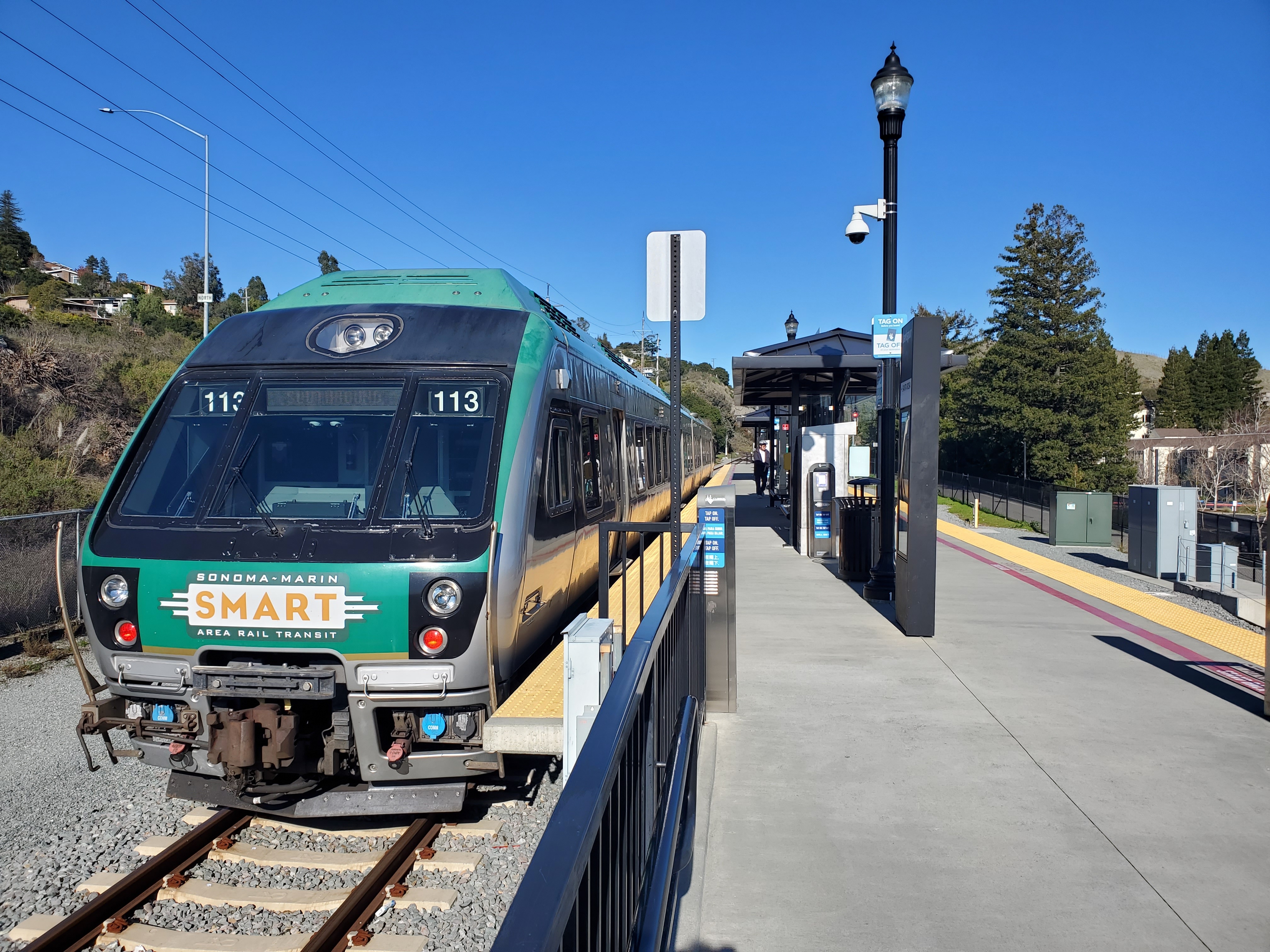
SMART recorded a 20% overall ridership boost between April 12 and May 31 compared to the same period in 2025, according to a preliminary evaluation presented to the SMART Board of Directors on July 15. Saturday trips surged 58% and Sunday trips climbed 51%. Weekday ridership rose 14%.
Transfers between SMART, Marin Transit, Golden Gate Ferry, and Golden Gate Transit jumped 45% over the same two-month window, SMART planning manager Zoe Unruh told the board.
"It's really gratifying seeing some of the early results here," said Sonoma County Supervisor Chris Coursey, who chairs the SMART board.
What changed
MASCOTS synchronized schedules across four agencies so riders could move between train, bus, and ferry without long gaps. SMART added six weekday trips (from 42 to 48) and eight weekend trips (from 16 to 24), running from 4:30 a.m. to 11:15 p.m. Golden Gate Transit cut total service hours by 12% but increased the number of trips by 22% by eliminating low-ridership routes and concentrating buses where demand is highest.
Route 101 between San Rafael and San Francisco runs every 15 minutes during weekday peaks and every 30 minutes at other times. Route 120 between Sausalito and San Francisco nearly doubled its service level.
The plan also discontinued all Route 101 bus service between Novato and Santa Rosa. SMART now serves as the primary rail connection between Marin and Sonoma counties.
Time savings and local reaction
Weekday riders from Windsor taking SMART to the Route 101 bus are saving eight minutes southbound and 13 minutes on return trips to San Francisco, according to the evaluation. Marin Transit Route 71 riders connecting from downtown Novato to Route 120 in Sausalito are saving 18 minutes each way.
Beau Blanchard, president of the San Rafael Chamber of Commerce, said more than 40,000 Marin County residents commute outside the county daily. He said expanded evening and weekend service should help workers at employers like BioMarin, one of San Rafael's largest.
Not everyone is satisfied. Shane Weinstein, president of Amalgamated Transit Union Local 1575 in San Rafael, said the Route 101 cuts hurt Sonoma residents who work late. Riders returning from San Francisco must reach San Rafael by 10:10 p.m. to catch the last SMART train north. Joseph Costa, a San Anselmo resident waiting at the San Rafael Transit Center in early July, said the new schedule forces him to transfer between two sets of buses and called it "a wash" for his commute.
What comes next
Staff from all four transit agencies told the board they plan to present a snapshot of rider trends by the end of 2026. Unruh said a one-year pilot evaluation is expected around April 2027. The agencies will conduct a formal review with rider surveys through 2029 before deciding which changes become permanent. Golden Gate Transit will also restore its Route 172x Sonoma County commuter bus in September due to demand.