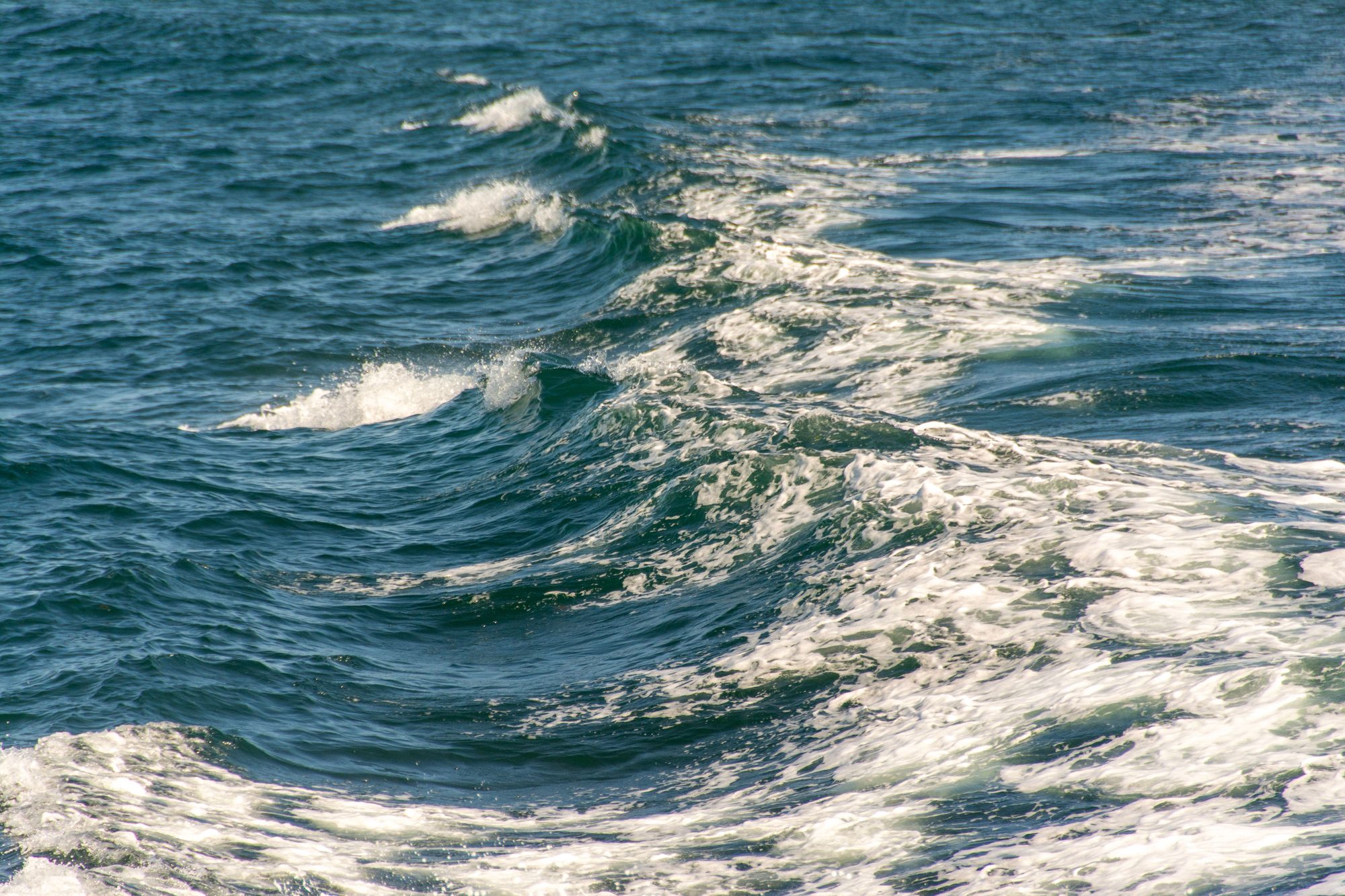
Water levels in San Rafael could rise up to a foot by the first or second week of October as a massive ocean wave moves up the Pacific coast. The timing puts the city's most flood-vulnerable neighborhoods at heightened risk just before the year's highest tides.
The coastally trapped Kelvin wave, a signature of El Niño, was moving north along Mexico's coast as of Tuesday, Sept. 15, and is expected to reach the Bay Area by the first or second week of October, Patch reported. The wave could raise coastal sea levels 6 to 12 inches, according to Dillon Amaya, an assistant professor of marine, earth and atmospheric sciences at North Carolina State University who is tracking it.
"Six inches may not sound like a lot, but it can absolutely be a big deal," Amaya told Patch.
The elevated water won't recede quickly. Amaya said it can take three to six months for sea levels to settle back down after a Kelvin wave passes. That means higher water could persist through winter, when California's strongest king tides arrive from November through January. CBS News Bay Area reported that this year's highest king tides coincide with Thanksgiving and Christmas.
Amaya cited a rule of thumb: every four inches of sea-level rise can double the flooding risk for low-lying coastal areas.
Canal District faces the greatest exposure
San Rafael's Canal neighborhood, home to about 12,000 people, sits squarely in the path of that risk. The Bay Conservation and Development Commission identified the Canal District as having the highest proportion of residents at risk of flooding from early sea-level rise among 30 Bay Area communities, according to a 2020 vulnerability study cited by the San Francisco Chronicle.
The neighborhood is sinking.
The Canal District is built largely on filled wetlands, according to the Chronicle, and its flatlands form a bowl shape, protected by makeshift levees constructed from plywood, cement and asphalt, and pumps that are already struggling, KQED reported. The district's two main exit roads sit lower than the highest tide, according to the Chronicle.
UC Berkeley professor Kristina Hill has warned that saltwater overtopping the Canal District's levees can flood the bowl-shaped neighborhood up to four feet, she told KQED in coverage of king tide flooding in the area. Protecting the shoreline could cost $719 million to $1.9 billion, according to a feasibility study cited by the Chronicle.
El Niño compounds the flood risk
The Kelvin wave arrives during what the National Oceanic and Atmospheric Administration (NOAA) says has a greater than 90% chance of being a strong El Niño through December, the Mercury News reported. There is a 75% probability it will rank as the strongest since modern records began in 1950.
The last major El Niño, in 2015–2016, produced five to six Kelvin waves. Some coincided with atmospheric rivers that drove record wave heights. Point Reyes recorded waves over 55 feet in December 2015, according to CBS News Bay Area.
Amaya said more Kelvin waves are expected and that this will not be a one-time event. A wave already passed California in May and June, Amaya said, with NOAA saying its effects were minor.
UC climate scientist Daniel Swain warned in the Los Angeles Times that coastal flooding poses a major risk this winter for bays and estuaries, not just the open coast. He specifically named Highway 37, which connects Marin County to Napa County, and parts of Highway 101 as flood-vulnerable.
County and city preparing
Marin County has 32 sites offering sandbags to residents and is working with local jurisdictions to assess storm infrastructure and map low-lying areas, according to KQED and the Mercury News. Residents can sign up for emergency alerts through Alert Marin.
The City of San Rafael's Canal Community Resilience Planning Project is exploring actions to reduce flood risk in the neighborhood. Kate Hagemann, the city's climate adaptation and resilience planner, is the point person on sea-level rise planning. The city held a Climate Action Forum in August, according to the city's Sea Level Rise Collaborative page.
No upcoming city or county meeting specifically addressing the Kelvin wave has been announced.