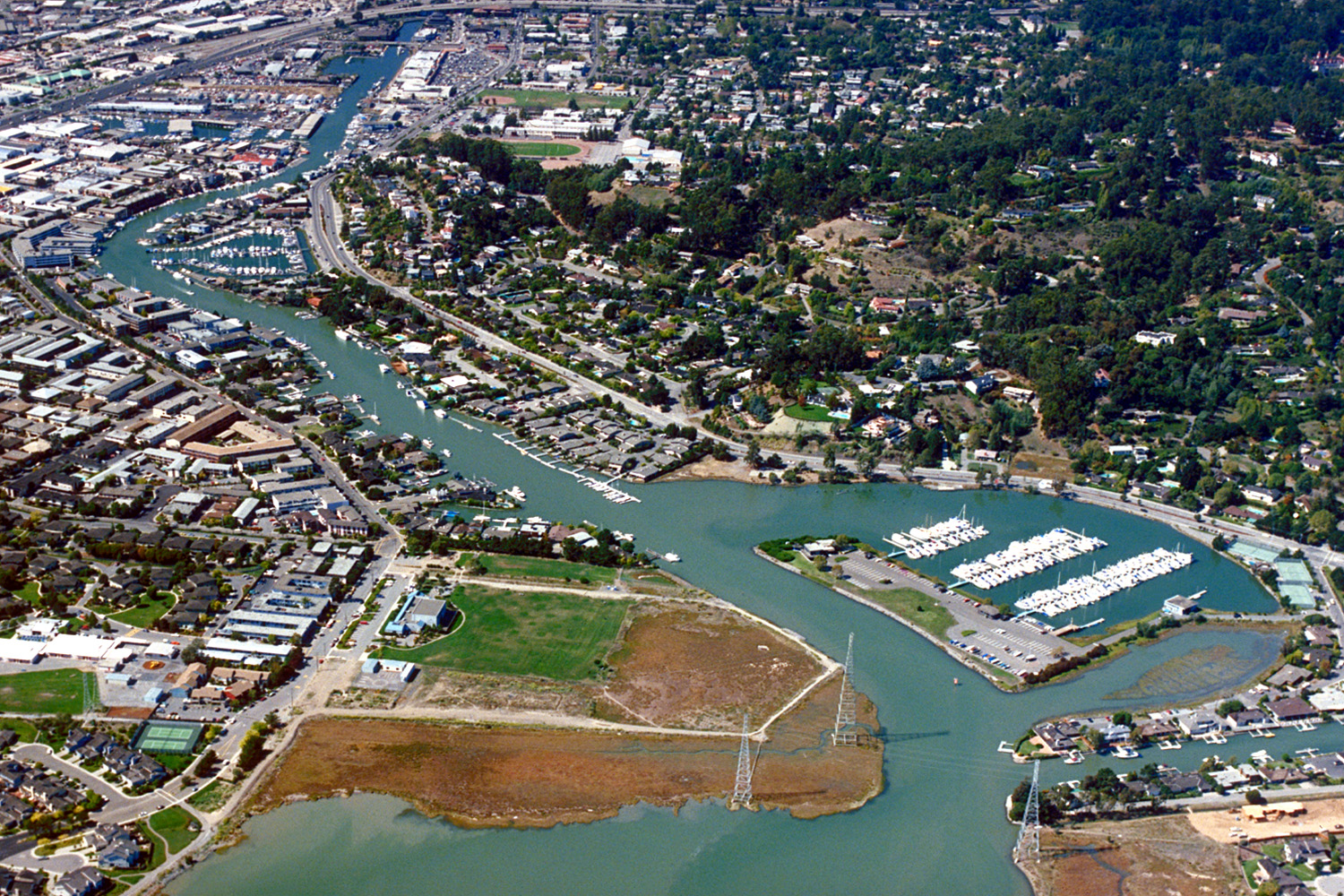
San Rafael's Canal neighborhood is among the communities most at risk as Marin County confronts an estimated $17 billion in sea level rise adaptation costs, according to a two-year study the Board of Supervisors voted to accept on Tuesday, July 14.
The board directed the county's Climate Office to lead coordination among cities, special districts, and regional partners using existing government structures. The decision sets the framework for how Marin will tackle flooding threats across more than 110 miles of bay and coastal shoreline.
The $519,000 study, conducted by engineering firm AECOM under a contract approved in March 2024, evaluated governance options for how local governments across Marin can work together on sea level rise planning. Its central recommendation: strengthen collaboration through shared technical expertise, coordinated grant strategies, and regional partnerships instead of building a new agency or joint powers authority.
The staff report presented to the board was authored by Talia Smith, Deputy County Executive, and Dr. Nadia Seeteram, the county's Chief Climate Officer, and reviewed by Assistant County Executive Josh Swedberg.
Dr. Seeteram said in a county news release that the report "clarifies shared priorities across Marin" and that the engagement work behind it "will guide future County-led coordination and convening efforts and improve our ability to secure funding for projects that protect our communities, infrastructure, and natural resources."
Vulnerable communities
The study specifically named the Canal neighborhood, a predominantly Latino community in San Rafael, among the areas most vulnerable to sea level rise, king tides, storm surge, and coastal flooding. Other at-risk communities include Marin City, Santa Venetia, shoreline neighborhoods in Larkspur, and floating home communities in Sausalito.
A photo published with the county's July 9 news release showed cars stuck on a flooded road in San Rafael during a January 2026 storm.
Coordination challenges
The AECOM report found that while Marin has a strong foundation for climate resilience, fragmented coordination among jurisdictions, limited staffing at smaller cities and towns, federal and state regulatory complexity, and funding challenges continue to slow implementation. Marin's bayside shoreline alone includes eight incorporated cities and towns and more than 30 special districts.
What comes next
The Climate Office, established within the Office of the County Executive, will serve as a countywide resource working with cities, special districts, Tribal governments, community organizations, and regulatory agencies.