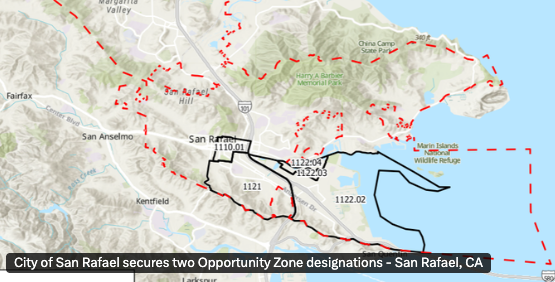
Two census tracts covering parts of downtown and southeast San Rafael have received federal Opportunity Zone designations, offering tax incentives for qualifying investments beginning Jan. 1, 2027.
The areas were the city’s highest priorities for the program, according to its Nov. 5 announcement. The city also shared the approval in a Nov. 11 post on X.
The U.S. Treasury Department certified the areas under Opportunity Zones 2.0. The designations last 10 years and are intended to encourage private investment in communities facing economic challenges.
What the designation offers
The program provides federal tax incentives for investors who reinvest capital gains—profits from selling assets—through special funds that invest in qualifying businesses and projects.
Eligible investments can include housing and commercial construction, rehabilitation of underused properties and investments in operating businesses. Some infrastructure and energy projects may also qualify.
The designation does not provide automatic funding or guarantee construction. The city says community benefits will depend on which projects attract investment and how those projects serve residents and businesses.
Why the city selected these areas
San Rafael sought the designations to support housing, business development and climate adaptation.
In southeast San Rafael, the city identified opportunities across commercial, industrial and residential areas. It says investment could support local jobs, workforce programs and planning for sea level rise.
Downtown’s transit connections could support housing near public transportation. The city also identified potential investment around the San Rafael Transit Center and the life sciences sector near BioMarin’s headquarters.
The City Council recommended five census tracts in July, ranking the southeast and downtown areas first and second. Both priorities received certification.
Part of a statewide selection
California received certification for 620 tracts from 2,479 eligible tracts, according to the California Department of Finance. Its website links to a map showing the designated boundaries.
Congress created Opportunity Zones through the Tax Cuts and Jobs Act of 2017. A federal law signed July 4, 2025, made the program permanent and established recurring designation cycles.
The Treasury Department says the new designations take effect Jan. 1, 2027. Existing Opportunity Zone designations remain effective through Dec. 31, 2028, according to state guidance.